
Introduction
India is a paradise for street food lovers. In no other country does street food culture run so deep, so diverse, and so delicious. From the narrow, chaotic lanes of Old Delhi to the wide seafront promenades of Mumbai, the bustling bazaars of Kolkata to the temple streets of Chennai, every corner of India has its own unique street food culture.
Indian street food is not just about eating — it is an immersive sensory experience that combines extraordinary flavors with the energy and spectacle of the streets. Here are fifteen Indian street foods that deserve a place on every food lover’s bucket list.
1. Pani Puri — The Ultimate Street Snack
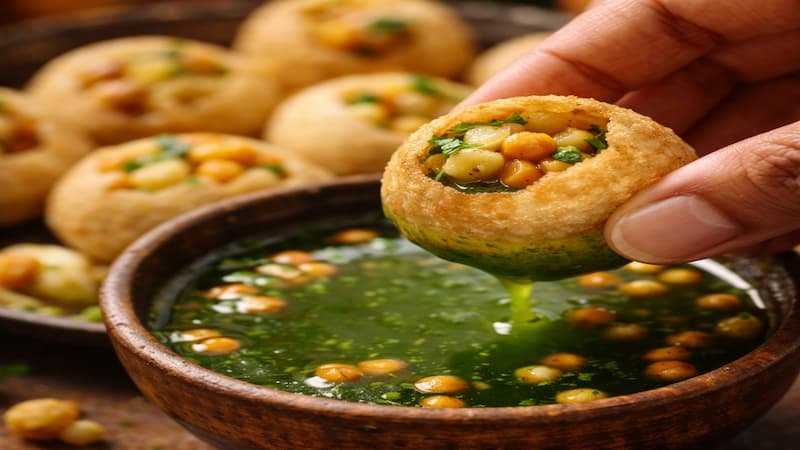
If you asked a thousand Indians to name their favorite street food, a majority would say pani puri. Known as golgappa in Delhi, puchka in Kolkata, and fuchka in parts of Bengal, this beloved snack consists of small, perfectly crispy hollow puris filled with a mixture of spiced mashed potatoes, chickpeas, and tangy tamarind chutney, then submerged in spiced, chilled pani (flavored water).
The pani is the soul of this dish — made from tamarind, mint, coriander, black salt, jeera, and green chilies, it is simultaneously tangy, spicy, minty, and refreshing. Each puri must be eaten whole in one bite for the full experience.
2. Vada Pav — Mumbai’s Soul Food
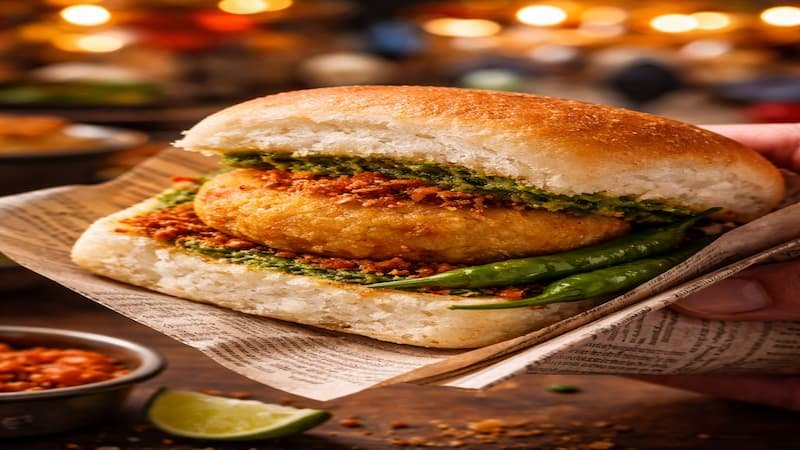
Often described as Mumbai’s burger, vada pav is the definitive street food of India’s financial capital. A perfectly spiced potato fritter (vada), made from boiled mashed potatoes mixed with mustard seeds, curry leaves, green chilies, and garlic, is deep-fried in a chickpea batter until golden and crispy. This hot vada is sandwiched in a soft, pillowy pav (bread roll) along with dry garlic chutney, green chutney, and tamarind chutney.
It costs just a few rupees and yet delivers an explosion of flavors that no expensive restaurant dish can replicate. It is beloved equally by millionaires and laborers.
3. Chole Bhature — A North Indian Classic
Few dishes capture the spirit of North Indian food as completely as chole bhature. The chole is a slow-cooked spiced chickpea curry that is deeply flavored with whole spices, ginger, garlic, tomatoes, and a special blend of spice powders including chana masala and dried mango powder (amchur). The bhatura is a large, pillowy deep-fried bread made from leavened dough that puffs up dramatically when it hits the hot oil.
The combination of the sour, spicy chole with the rich, chewy bhatura is outrageously satisfying. It is traditionally eaten for breakfast or brunch in Punjab and is now beloved across North India.
4. Masala Dosa — South India’s Gift to the World
The masala dosa is perhaps South India’s most iconic contribution to global food culture. The dosa itself is a large, thin, extraordinarily crispy crepe made from a fermented batter of rice and lentils. Inside the dosa is a filling of spiced mashed potatoes cooked with mustard seeds, onions, curry leaves, and turmeric.
The contrast between the paper-thin, lacy, golden-brown exterior and the soft, aromatic potato filling is truly magnificent. It is served with sambar (a lentil and vegetable soup) and coconut chutney. When properly made, a masala dosa can be over a foot long and is spectacular to look at.
5. Kathi Roll — Kolkata’s Street Legend
The kathi roll originated in Kolkata and has conquered the rest of India. It starts with a flaky, layered paratha that is cooked with egg on a griddle. This egg-coated paratha is then wrapped around a filling of your choice — classic options include chicken tikka, paneer, egg, or mixed vegetables — along with sliced onions, fresh coriander, and chutneys.
The combination of the crispy, eggy paratha with the flavorful filling and the freshness of the herbs and onions makes it one of the most satisfying street foods in India. It is the original wrap sandwich, predating all modern fast-food versions.
6. Bhel Puri — Mumbai’s Beach Food
Bhel puri is the quintessential beach snack of Mumbai, especially associated with Juhu and Chowpatty beaches. It is a cold, textured mixture of puffed rice, thin sev (fried chickpea noodles), chopped tomatoes, onions, boiled potatoes, fresh coriander, and two chutneys — a sweet and tangy tamarind chutney and a spicy green chutney.
The beauty of bhel puri is that it must be assembled and eaten immediately, as the puffed rice quickly loses its crunch. A skilled bhel puri vendor assembles it in seconds with practiced efficiency.
7. Jalebi — Breakfast Royalty
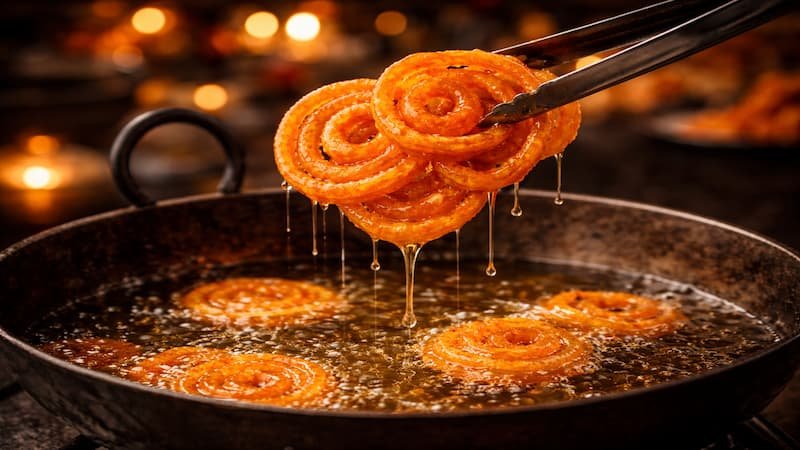
Jalebi is one of India’s most ancient sweets and is still one of the most popular. Made from a slightly fermented batter of flour that is piped in spirals directly into hot oil and fried until golden and crispy, the hot jalebis are then immediately submerged in sugar syrup. The result is a simultaneously crispy and syrup-soaked sweet that is best enjoyed piping hot.
The combination of the crispy exterior, the sweet, slightly tangy syrup, and the subtle fermented flavor is unique and utterly addictive. In many parts of India, fresh hot jalebi with a glass of cold milk or a bowl of rabri is the ultimate breakfast treat.
8. Pav Bhaji — The Vegetable Extravaganza
Pav Bhaji is a thick, richly spiced vegetable mash cooked on a large flat griddle (tawa) with a generous amount of butter. The bhaji includes mashed potatoes, peas, tomatoes, capsicum, and onions, all seasoned with pav bhaji masala, red chili powder, and finished with a large cube of butter.
It is served with soft pav rolls that are sliced and toasted in butter on the same griddle until golden. Pav Bhaji originated as a quick, affordable meal for textile mill workers in Mumbai and has grown into one of India’s most beloved comfort foods.
Why Indian Street Food is Special
What makes Indian street food so extraordinary is the combination of freshness, flavor complexity, and sheer variety. Most street foods are prepared fresh to order using traditional recipes that have been refined over generations. The spice combinations are sophisticated, the techniques are practiced, and the flavors are bold and unapologetic.
Street food in India is also deeply democratic — the same snack is enjoyed with equal enthusiasm by people from all economic backgrounds. It is one of the great equalizers of Indian society.
Conclusion
Indian street food represents the culinary soul of the country — unpretentious, bold, deeply flavorful, and endlessly diverse. Each of the foods described above tells a story about the region it comes from, the people who created it, and the culture that sustains it.
Whether you are visiting India for the first time or are a lifelong resident, exploring the street food scene is one of the most authentic and rewarding food experiences you can have. Just remember to start small, build up your spice tolerance, and most importantly — eat with your hands and enjoy every bite.