
Introduction
South Indian cuisine is one of the most distinctive, diverse, and nutritionally sophisticated food cultures in the world. Encompassing the states of Tamil Nadu, Kerala, Karnataka, Andhra Pradesh, and Telangana, South Indian food is defined by its use of rice, lentils, coconut, tamarind, curry leaves, and an extraordinary array of spices, with cooking methods that prioritize lightness, digestibility, and the preservation of natural flavors.
While the world knows South Indian food primarily through dosa and idli, the actual breadth of this cuisine — encompassing hundreds of distinct preparations, regional specialties, and festival foods — is astounding. This guide introduces the key elements of South Indian cuisine.
The Holy Trinity — Rice, Lentils, and Coconut
If North Indian cuisine is built on wheat, dairy, and meat, South Indian cuisine is built on rice, lentils, and coconut. Rice appears at virtually every meal — as steamed rice, as idli, as dosa, as pongal, as ven pongal, as rice payasam. Lentils appear as sambar, rasam, dal, papad, and in the batter of idli and dosa.
Coconut appears as fresh grated coconut garnish, as coconut chutney, as coconut milk in curries, as coconut oil in cooking, and as a tempering ingredient. This troika creates a cuisine that is primarily vegetarian, rich in complex carbohydrates and plant protein, fermented (improving digestibility), and deeply nourishing.
Sambar — The Soul of South Indian Cooking
Sambar is perhaps the most important dish in South Indian cuisine — a thick, tamarind-based lentil soup cooked with a variety of vegetables and seasoned with a distinctive spice blend (sambar masala). Each South Indian state, and indeed each family, has its own unique sambar recipe. Tamil Nadu sambar tends to be thicker and more tamarind-forward. Kerala sambar is coconut-enriched.
Karnataka sambar often includes jaggery for sweetness. Andhra sambar is typically more chili-hot. Common to all versions are toor dal, tamarind, tomatoes, and the essential tempering of mustard seeds, curry leaves, dried red chilies, and hing in oil.
Rasam — The Digestive Tonic
Rasam is a thin, pepper-and-tamarind soup that is consumed at the end of a South Indian meal as a digestive aid. The word rasam means essence or juice, and this clear, intensely flavored broth is considered essential to the South Indian thali.
The combination of black pepper (digestive, antimicrobial), tamarind (digestive, Vitamin C), tomato, and a tempering of cumin, mustard seeds, and curry leaves creates a soup that is both delicious and medicinally effective. The version without lentils — pure peppery tamarind water with spices — is used as a home remedy for colds, fevers, and digestive upsets.
The South Indian Thali — A Complete Meal
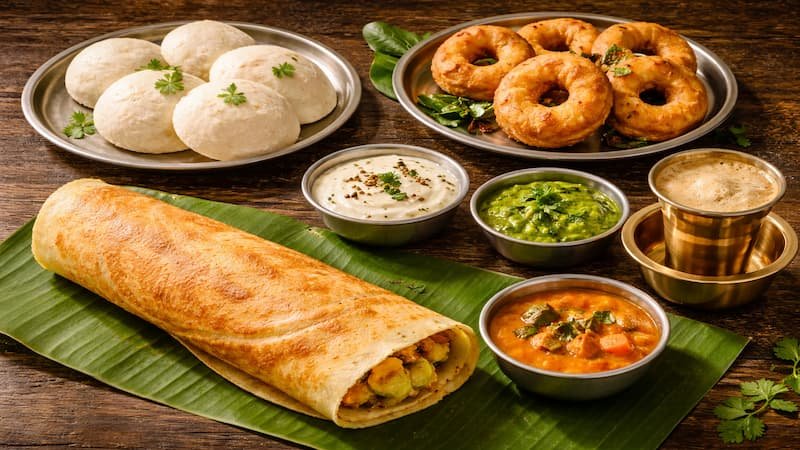
The South Indian thali (or sapad in Tamil, oota in Kannada) is one of the world’s most nutritionally complete and satisfying meals. Served on a banana leaf (which adds a subtle flavor and is antimicrobial), a traditional thali includes: plain rice, sambar, rasam, two or three vegetable dishes (poriyal — dry-cooked vegetable; kootu — vegetable and lentil combination), papad, chutneys, pickles, and curd.
The meal is structured to be eaten in a specific sequence — sambhar first to prepare the stomach, then the main course, finishing with curd rice — which maximizes digestive efficiency.
Kerala Cuisine — Coastal Magnificence
Kerala cuisine is distinctive even within South India due to its abundant use of coconut (in every form), its extraordinary seafood tradition, and its Malayali Muslim and Syrian Christian communities who have developed their own unique meat-based cooking traditions. Kerala’s geography — a narrow strip of land between the Western Ghats and the Arabian Sea — has produced a cuisine of exceptional diversity.
Fish molee (fish cooked in coconut milk), appam with stew, Malabar biryani, sadya (the elaborate vegetarian feast served on banana leaf for festivals), and various pickles and chutneys unique to the region make Kerala one of India’s most exciting culinary destinations.
Andhra Pradesh — India’s Spiciest Cuisine
Andhra Pradesh is famous for being the spiciest region in India, and possibly the world. Andhra cuisine features generous use of fiery red chilies (particularly the Guntur chili, one of the world’s hottest commercial chilies), tamarind, and distinctive spice combinations.
Classic Andhra dishes include pesarattu (green moong dosa), Gongura (sorrel) dishes, Hyderabadi biryani (now technically Telangana, but historically linked to the Andhra region), and the legendary Andhra meals served in restaurants where fiery curries are served on banana leaves with unlimited rice. Andhra pickles — gongura pickle, avakaya (raw mango pickle) — are among the most intensely flavored in India.
Karnataka’s Diverse Culinary Tradition
Karnataka’s cuisine is wonderfully diverse, reflecting its geography that ranges from coastal Karnataka (Tulu Nadu) to the Kodagu (Coorg) hills to the Deccan plateau. Coastal Karnataka is known for its extraordinary fish curries, prawn ghee roast, and Mangalorean cuisine. Kodagu is famous for its pork dishes and the smoky, complex Coorgi pandi curry.
North Karnataka, bordering Andhra and Maharashtra, has a spicier, more robust cuisine. The Udupi tradition — strict vegetarian cuisine developed in the temple town of Udupi — has had global influence through its use of vegetables and specific cooking techniques that balance all six tastes.
Conclusion
South Indian cuisine represents one of humanity’s greatest culinary achievements. Its sophisticated understanding of fermentation, its nutritionally complete meal structures, its extraordinary use of plant foods, its remarkable regional diversity, and its perfect balance of flavors and textures make it a cuisine worthy of deep study and enthusiastic consumption.
Whether you are new to South Indian food or a lifelong devotee, there is always more to discover — another regional specialty, another festival preparation, another family recipe that illuminates some new aspect of this inexhaustible culinary tradition.