
Introduction
Butter Chicken, or Murgh Makhani, is one of India’s most iconic and globally beloved dishes. Its rich, creamy, mildly spiced tomato-based sauce with tender pieces of charred chicken has won over millions of fans worldwide. Despite its luxurious appearance and taste, Butter Chicken has surprisingly humble origins — it was invented in Delhi in the 1950s when a restaurateur combined leftover tandoori chicken with a tomato-butter gravy.
Today, it is one of the most ordered Indian dishes in restaurants worldwide. In this guide, we break down every step to help you make a restaurant-quality Butter Chicken at home that will impress everyone at your table.
The Two Essential Components
Butter Chicken consists of two separate preparations: the marinated and cooked chicken, and the makhani (butter) sauce. Both must be done correctly for the dish to succeed.
Many home cooks make the mistake of skipping proper marination or rushing the sauce — both result in a dish that is pale shadow of what Butter Chicken should be. Take the time to do each component properly and you will be richly rewarded.
First Marinade — Preparing the Chicken
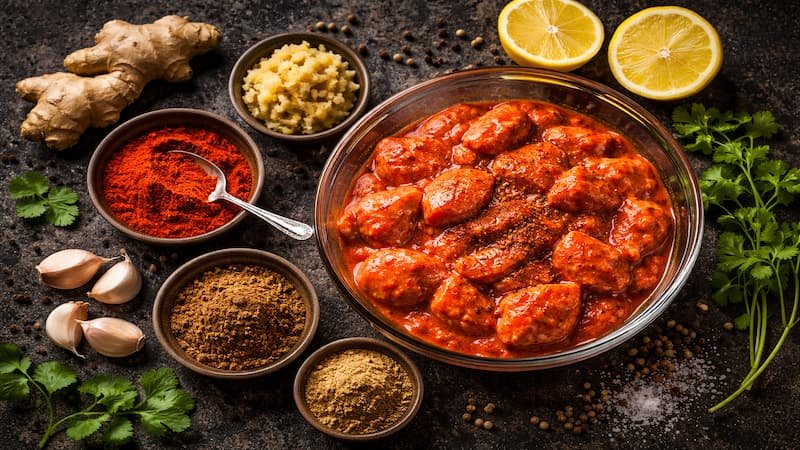
Begin with bone-in or boneless chicken pieces (thighs work best as they stay juicier). Prepare the first marinade by combining lemon juice, salt, and Kashmiri red chili powder. Rub this into the chicken and let it rest for 20 minutes. This first marinade begins the tenderizing process and lays a flavor foundation.
Then prepare the second, more complex marinade: thick hung curd (yogurt from which excess water has been strained), fresh ginger-garlic paste, garam masala, cumin powder, coriander powder, turmeric, and a little oil. Coat the chicken thoroughly in this second marinade and refrigerate for a minimum of 4 hours, ideally overnight. The longer the marination, the more tender and flavorful the chicken.
Cooking the Chicken
The most authentic cooking method is a tandoor, but a very hot oven (240°C/460°F) or a hot grill can produce excellent results. Place the chicken on a rack set over a baking tray and cook for 20-25 minutes, turning once halfway through, until the chicken is cooked through and has slight charred marks. The charring is not incidental — it is essential.
Those slightly burnt edges create volatile aromatic compounds that give Butter Chicken its distinctive smoky flavor. Alternatively, grill the chicken in a cast-iron pan over very high heat. Once cooked, brush lightly with butter and set aside.
Making the Makhani Sauce — The Secret to Richness
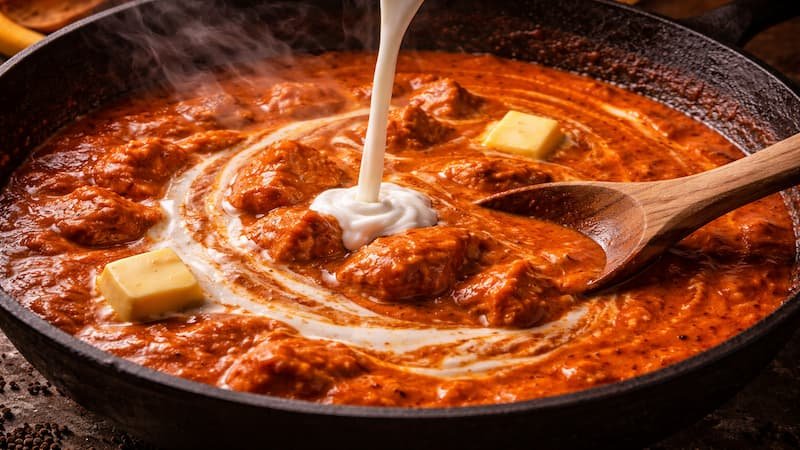
The makhani sauce requires patience and good quality ingredients. Start by cooking onions (roughly chopped), garlic, ginger, fresh tomatoes, and whole cashews in butter until everything is completely soft and the tomatoes have broken down — this takes about 20-25 minutes. Add Kashmiri red chili powder (which gives the sauce its characteristic deep red color without excessive heat), coriander powder, and garam masala.
Let it cook for another 5 minutes. Allow the mixture to cool slightly, then blend it into an absolutely smooth puree. Strain through a fine mesh sieve, pressing firmly with a spoon — this straining step is what gives restaurant Butter Chicken its silky, luxurious texture.
Building the Final Sauce
Return the strained puree to a heavy-bottomed pan over medium heat. Add butter generously — this is Butter Chicken, after all. Let the sauce cook, stirring frequently, until it darkens slightly and you see the butter separating at the edges. This process, called bhunoing, develops deep flavor. Add heavy cream and mix well.
Season with salt and a small amount of sugar to balance the acidity of the tomatoes. The sauce should be a rich, glossy, deep orange-red color. Now comes the most important finishing ingredient: dried fenugreek leaves (kasuri methi), crushed between your palms before adding. This herb is the single ingredient that most distinguishes restaurant Butter Chicken from home versions — do not leave it out.
Combining and Finishing
Add the cooked chicken pieces to the sauce and simmer together on low heat for 10-15 minutes. This allows the chicken to absorb the flavors of the sauce and the sauce to take on the smoky, spiced notes from the chicken.
If using a dhungar (charcoal smoking) technique, this is the time to do it: place a small piece of burning charcoal in a metal bowl inside the pot, drizzle with ghee, and cover immediately for 2-3 minutes. This imparts a beautiful smoky flavor that elevates the dish significantly.
Serving and Accompaniments
Serve Butter Chicken hot, drizzled with a swirl of cream and garnished with a pinch of garam masala and fresh coriander. The best accompaniments are butter naan, garlic naan, or lachha paratha for a true restaurant experience.
Steamed basmati rice is also excellent. A small side salad of sliced onions, cucumber, and a wedge of lemon provides a refreshing contrast to the richness of the dish.
Conclusion
Restaurant-quality Butter Chicken at home is entirely achievable with the right technique and quality ingredients. The key steps — proper dual marination, achieving some char on the chicken, making a fully cooked and strained sauce, finishing with kasuri methi — are what separate a good Butter Chicken from a great one.
Once you have mastered this recipe, you will find it hard to justify paying restaurant prices for what you can create in your own kitchen.