
Introduction
India’s relationship with bread stretches back thousands of years, and no other country in the world has developed such a diverse and sophisticated repertoire of breads. From the simple, everyday whole wheat roti to the elaborate layered paratha, from the pillowy tandoor-baked naan to the crispy deep-fried puri, Indian breads represent a culinary tradition of extraordinary range and ingenuity.
Each Indian bread has its own specific flour, cooking method, regional identity, and appropriate accompaniments. This comprehensive guide introduces you to the most important Indian breads and provides the fundamental techniques for making them at home.
Roti/Chapati — The Everyday Essential
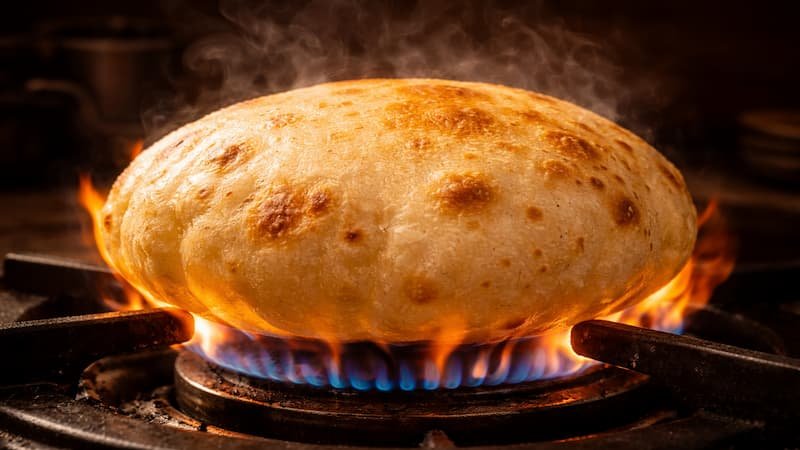
Roti, also called chapati, is the most widely consumed bread in India — hundreds of millions of Indians eat it at least once every day. It is made from atta (whole wheat flour) mixed with water to form a soft, pliable dough, rested for 20 minutes, rolled into thin rounds, and cooked on a dry tawa (griddle) until it puffs up from the trapped steam. The key to great roti is the dough — it should be soft and smooth but not sticky.
The rolling should be even and thin (about 2mm). The roti should be cooked on high heat so it puffs dramatically. A perfect roti puffs up completely into a ball, which indicates that the interior is well-cooked and the layers have fully separated.
Paratha — The Comfort Bread
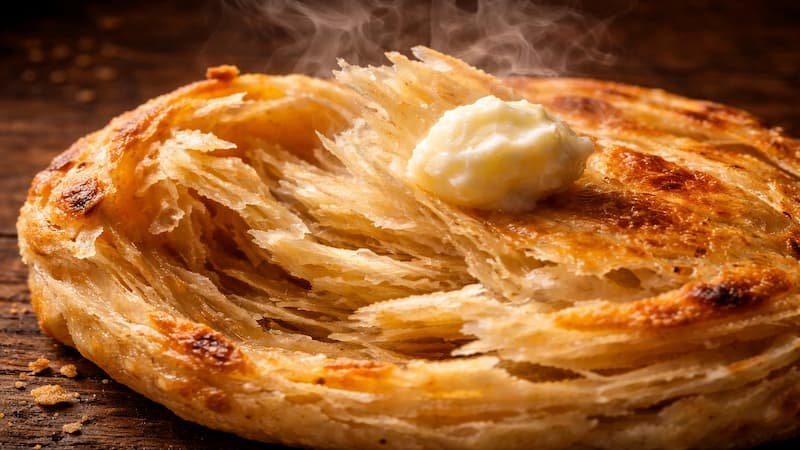
Paratha is a richer, more substantial bread made from the same whole wheat dough as roti but layered with fat (oil or ghee) to create a flaky, multi-layered texture. The basic technique involves rolling a dough ball into a circle, applying a thin coat of ghee, folding and re-rolling to create layers. The most beloved variety is stuffed paratha, where the dough is wrapped around a filling before rolling.
Aloo paratha (potato-stuffed) is perhaps the most popular, filled with spiced mashed potatoes seasoned with green chili, coriander, garam masala, and dried mango powder. Gobi paratha (cauliflower), paneer paratha, and dal paratha are other classic varieties.
Naan — The Restaurant Favorite
Naan is a leavened flatbread traditionally baked in a tandoor (clay oven) at extremely high temperatures. Unlike roti and paratha, naan uses maida (all-purpose/refined flour) and is leavened with yeast or yogurt, giving it a soft, slightly chewy texture with characteristic charred bubbles on the surface. The combination of the very hot tandoor and the leavening creates naan’s distinctive puffed, slightly irregular surface.
At home, naan can be approximated by cooking on a very hot cast-iron pan or under a very hot grill. Butter naan, garlic naan, and stuffed naan (with paneer, potato, or onion filling) are the most popular varieties.
Puri — The Festival Bread
Puri is a deep-fried bread made from whole wheat flour that puffs up dramatically into a hollow ball when dropped into hot oil. The visual spectacle of puris puffing up is irresistible and somehow never loses its magic. The key to perfectly puffed puris is frying in oil at the right temperature (180°C) and ensuring the dough is stiff rather than soft.
Puris are associated with festival food, special occasions, and the classic puri-sabzi breakfast. They should be eaten immediately as they deflate quickly. Puri with aloo ki sabzi, chole, or halwa is a quintessential Indian celebration meal.
Bhatura — The Bigg Brother of Puri
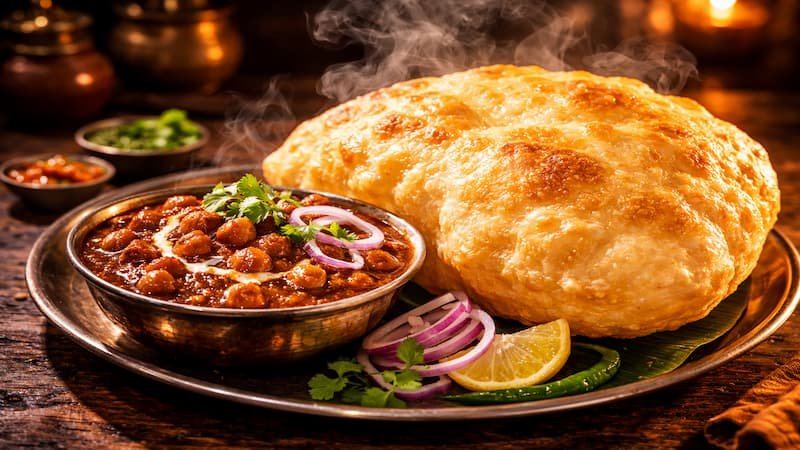
Bhatura is a large, leavened deep-fried bread that is softer and chewier than puri, with a more substantial texture. It is made from maida leavened with yogurt and sometimes baking soda, and the dough is rested for several hours before being shaped into large ovals and deep-fried. Bhatura puffs up into a large, cloud-like bread that is simultaneously crispy, light, and chewy.
It is virtually always served with chole (spiced chickpea curry) as the iconic North Indian dish chole bhature. A good bhatura should be large, light, and properly cooked all the way through.
Dosa — South India’s Crepe
While technically not a bread in the conventional sense, dosa is one of South India’s most important flatbreads. Made from a fermented batter of rice and lentils, it is cooked into a large, thin, crispy crepe on a hot griddle. Plain dosa, masala dosa (with potato filling), rava dosa (semolina-based), and set dosa (thick, spongy variety) are all beloved varieties.
Dosa is naturally gluten-free, fermented (making it probiotic), and lighter and more digestible than most other Indian breads. The fermentation process also increases its nutritional value significantly.
Thepla — Gujarat’s Gift
Thepla is a thin, flavored flatbread from Gujarat made from whole wheat flour mixed with fenugreek leaves (methi), yogurt, and spices. The dough is seasoned with turmeric, red chili, and cumin. Theplas are rolled thin and cooked on a tawa with a little oil until golden brown.
They have a longer shelf life than plain roti and are the quintessential travel food of Gujarat — they stay fresh for 3-4 days and are packed for train journeys and picnics across the country. The combination of the slightly bitter fenugreek and warming spices creates a complex, distinctive flavor.
Conclusion
Indian bread culture reflects the country’s extraordinary regional diversity and culinary ingenuity. Each of the breads described here is a world unto itself, with its own traditions, techniques, and perfect accompaniments. Mastering even a few of these breads will transform your ability to create authentic Indian meals.
Start with the humble roti — once you can make a perfectly puffed, evenly cooked roti consistently, every other Indian bread will seem more approachable. From there, explore the rich world of parathas, and when you are ready for a special occasion, attempt naan or the spectacular puri.