
Introduction
Ghee is liquid gold. This clarified butter, made by slowly cooking butter until all the water and milk solids are removed, leaving behind pure golden fat, is one of the most revered ingredients in Indian cuisine and Ayurvedic medicine. Homemade ghee is infinitely superior to the commercially produced ghee available in stores — it has a richer, more complex flavor, a beautiful golden color, and a deeply satisfying aroma of caramelized butter.
Making ghee at home is surprisingly simple and requires just one ingredient: good quality unsalted butter. This guide walks you through the traditional method of making ghee at home.
Why Make Ghee at Home?
Commercial ghee is produced quickly at high temperatures, which produces a pale, bland product that lacks the depth of traditionally made ghee. Homemade ghee made from cultured butter or high-quality cream develops a rich, nutty, complex flavor through the slow caramelization of milk solids.
It also allows you to control the quality of the source material — using ghee made from the milk of grass-fed cows produces a product higher in fat-soluble vitamins and conjugated linoleic acid. Additionally, homemade ghee is significantly more economical than premium store-bought ghee and provides immense satisfaction in the making.
Choosing the Right Butter
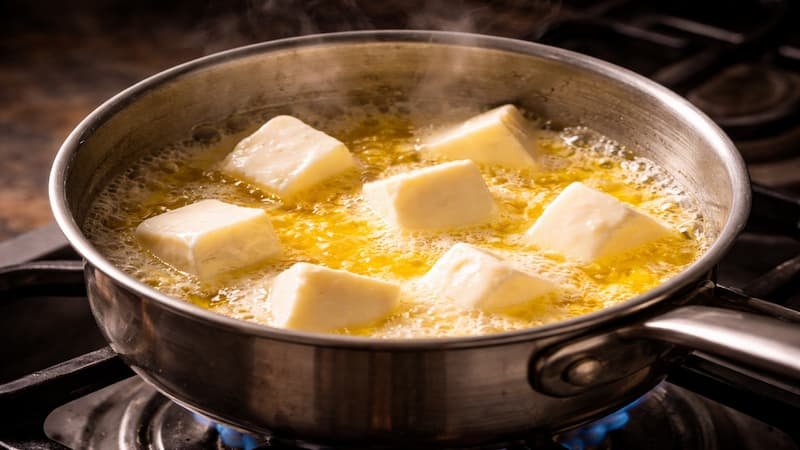
The starting material determines the quality of the ghee. For the best results, use unsalted, high-quality butter. If possible, use butter made from the cream of grass-fed cows — this produces ghee with a deeper golden color, better flavor, and higher nutritional quality.
Cultured butter (made from fermented cream) produces ghee with a more complex, slightly tangy flavor due to the presence of diacetyl, a compound produced during fermentation. White butter (makhan) made from homemade curd is the most traditional starting material and produces exceptional ghee.
The Process — Step by Step
Place the butter in a heavy-bottomed stainless steel pot over medium-low heat. As the butter melts, it will begin to foam on the surface — this foam consists of water vapor and some proteins. Stir gently and let it continue to cook. After about 10-15 minutes, the foam will subside (this is the water evaporating), and the milk solids will begin to settle at the bottom and turn golden-brown.
The ghee will clarify and become transparent, with a beautiful golden color. This is the critical phase — you need to watch carefully. The milk solids at the bottom should be a toasted golden-brown, not burnt black.
Knowing When the Ghee is Ready
The ghee is ready when several signs converge: the color of the liquid ghee has turned from a pale yellow to a rich, deep golden. The milk solids at the bottom are golden-brown and have stopped moving (the water has evaporated). The ghee looks completely clear and transparent, not cloudy.
The smell has transformed from butter to a rich, nutty, caramelized aroma. The temperature of the ghee, if you have a thermometer, will be around 150°C. Remove from heat immediately at this point — a few extra minutes can take ghee from perfectly caramelized to burnt, which produces a bitter, acrid product.
Straining and Storing
Allow the ghee to cool for about 5 minutes after removing from heat, then strain through a double layer of cheesecloth or a fine mesh strainer lined with muslin into a clean, dry glass jar. The strained milk solids can be saved — they are delicious spread on toast or added to dal. Store ghee at room temperature in a clean, airtight glass jar.
Properly made ghee has virtually no moisture or milk solids, which means it does not need refrigeration and will keep at room temperature for 2-3 months without going rancid. Always use a dry spoon to scoop ghee — even a drop of water can introduce bacteria and shorten shelf life.
Using Ghee in Cooking
Ghee has one of the highest smoke points of any cooking fat (approximately 250°C), making it ideal for high-heat cooking including deep frying, stir-frying, and roasting. Its rich, nutty flavor enhances virtually everything it touches — a spoonful of ghee on hot dal, a drizzle over freshly made paratha, or as the fat for tempering spices in biryani.
In Ayurveda, ghee is used as a medicine-delivery vehicle (anupana), as it is believed to carry the properties of medicinal herbs deeper into the tissues. A teaspoon of ghee in warm milk at bedtime is a traditional remedy for better sleep and digestive health.
Health Benefits of Ghee
After decades of being unfairly categorized as an unhealthy fat, ghee is being rehabilitated by modern nutritional science. Ghee is rich in butyrate, a short-chain fatty acid produced naturally in the body during fiber fermentation that supports gut health and reduces intestinal inflammation. It contains fat-soluble vitamins A, D, E, and K, which are poorly absorbed without fat.
Ghee made from grass-fed cow’s milk contains conjugated linoleic acid (CLA), which may support weight management and immune function. Ghee is essentially lactose-free and casein-free, making it suitable for many people with dairy sensitivities.
Conclusion
Making ghee at home is one of the most fundamental and rewarding kitchen skills an Indian cook can develop. The process is simple, the result is extraordinary, and the satisfaction of having made this golden elixir yourself is immense.
Once you start making your own ghee, you will likely never go back to the store-bought version. The rich, toasty, buttery aroma of freshly made ghee is one of the most wonderful smells in the kitchen, and the flavor it imparts to everything it touches is unmistakable and irreplaceable.