
Introduction
India has the world’s largest vegetarian population, and yet protein deficiency remains a significant public health concern in the country. Many people — vegetarians and non-vegetarians alike — underestimate how much protein they need and which foods can reliably provide it. The recommended dietary allowance for protein is approximately 0.8 grams per kilogram of body weight per day, meaning a 60kg person needs about 48 grams of protein daily.
Meeting this requirement on a vegetarian diet is entirely possible with the right food choices, and Indian cuisine actually provides a remarkably rich array of plant-based protein sources. This guide covers the best vegetarian protein sources available in India.
Why Protein Matters
Protein is not just for bodybuilders. It is an essential macronutrient that plays critical roles in virtually every bodily function. Proteins are the structural material of muscles, bones, skin, and organs. They are the building blocks of enzymes that catalyze every biochemical reaction in the body.
Hormones like insulin and thyroid hormones are proteins. Antibodies that protect against infection are proteins. Getting adequate dietary protein supports muscle maintenance and growth, immune function, wound healing, satiety (feeling full), and overall metabolic health. Protein deficiency leads to muscle loss, impaired immunity, poor wound healing, and a host of other health problems.
Dal and Lentils — The Everyday Protein Hero
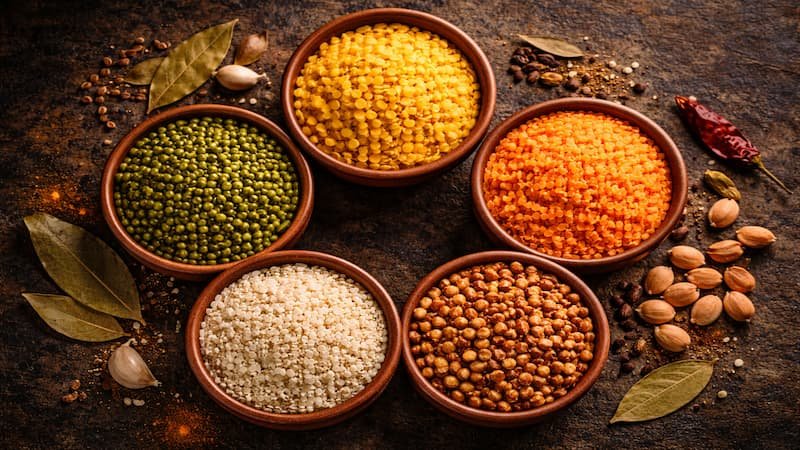
Dal is the most important protein source for vegetarians in India, and with good reason. Different varieties of dal provide 15-25 grams of protein per 100 grams (dry weight). Urad dal (black lentils) is one of the highest protein lentils at about 25 grams per 100 grams.
Moong dal provides about 24 grams per 100 grams and is particularly easy to digest, making it ideal for children, elderly people, and those recovering from illness. Chana dal and toor dal both provide approximately 20 grams of protein per 100 grams. Eating dal with rice creates a complementary amino acid profile — the combination provides all essential amino acids in good proportions, approaching the quality of animal protein.
Paneer — India’s Favorite Dairy Protein
Paneer is arguably the most popular protein food in Indian vegetarian cuisine. It provides approximately 18-20 grams of protein per 100 grams, along with substantial calcium, phosphorus, and fat-soluble vitamins. Because paneer is a concentrated dairy product, even a small serving (50-100 grams) adds meaningful protein to a meal.
Paneer is also unique among vegetarian proteins in that it is a complete protein, containing all essential amino acids in good proportions. It can be incorporated into the diet in countless ways — grilled, added to curries, crumbled into parathas, or eaten fresh with a sprinkle of spices.
Legumes and Beans — High Protein, High Fiber
Chickpeas (chana), kidney beans (rajma), black-eyed peas (lobia), and soybeans are all excellent protein sources that also provide substantial dietary fiber. Cooked chickpeas provide about 9 grams of protein per 100 grams and are the base for beloved dishes like chole (North India) and sundal (South India).
Rajma provides about 9 grams of protein per 100 grams cooked and is the star of the famous Punjabi rajma-chawal. Soybeans are the most protein-rich legume at about 36 grams per 100 grams dry weight, and soy chunks (nutrela or soy protein granules) are an affordable, versatile protein source that can be added to curries and rice dishes.
Dairy — Beyond Paneer
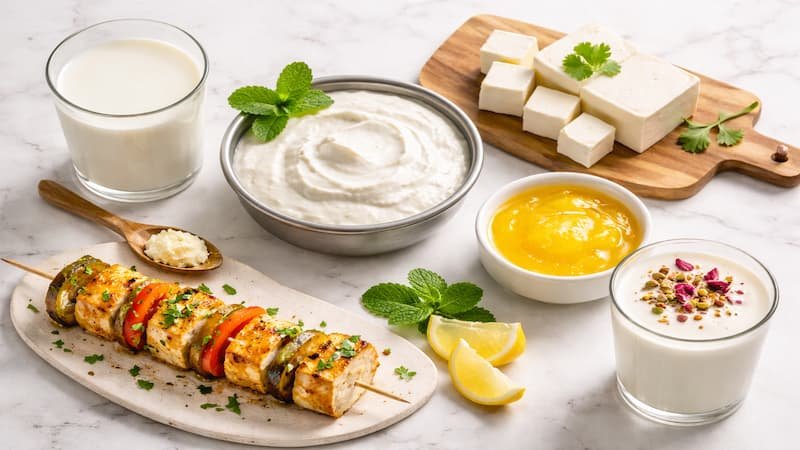
Dairy as a whole is an excellent protein source for vegetarians. Milk provides about 3.4 grams of protein per 100ml. A glass of full-fat milk (250ml) contributes 8-9 grams of protein. Greek yogurt (chakka dahi), made by straining regular yogurt to remove whey, concentrates the protein to about 17-20 grams per 100 grams — higher than paneer.
Regular homemade curd provides about 3.5 grams per 100 grams. Cheese, though less commonly consumed in India, is another concentrated protein source. For vegetarians, incorporating multiple dairy servings throughout the day can significantly boost protein intake.
Nuts and Seeds — Protein-Rich Snacks
Almonds contain about 21 grams of protein per 100 grams and are also rich in healthy monounsaturated fats, Vitamin E, and magnesium. A small handful (30 grams) of almonds adds 6 grams of protein to your diet. Groundnuts (peanuts) are the most affordable protein-rich nut, providing 26 grams of protein per 100 grams. They are also an excellent source of niacin and folate.
Hemp seeds are a complete protein with 31 grams per 100 grams. Pumpkin seeds provide 30 grams per 100 grams. Sesame seeds contribute 18 grams per 100 grams and are a significant source of calcium. Including a variety of nuts and seeds as daily snacks meaningfully increases protein intake.
Quinoa — The Complete Plant Protein
Quinoa is one of the few plant foods that provides a complete protein, containing all essential amino acids in adequate proportions. It provides about 8 grams of protein per 100 grams cooked — higher than most grains. Although not a traditional Indian ingredient, quinoa is now widely available in Indian supermarkets and works well in khichdi, pulao, and salads.
For vegetarians concerned about amino acid completeness, quinoa is a valuable addition to the diet. It is also gluten-free, making it suitable for those with wheat sensitivities.
Creating High-Protein Vegetarian Meals
The key to meeting protein needs on a vegetarian diet is strategic combination. Dal and rice together create a complete protein. Adding paneer to a vegetable dish dramatically increases protein content.
Including a handful of nuts or a glass of milk with each meal consistently adds protein. Breakfast options like moong dal chilla, paneer paratha, or high-protein smoothies ensure you start the day with adequate protein. A practical daily target might be: 2 cups of cooked dal, 100 grams of paneer, 1 cup of curd, and a handful of nuts — this combination alone provides 60-70 grams of protein.
Conclusion
A well-planned vegetarian Indian diet can comfortably meet protein requirements at every life stage. The key is diversity — relying on multiple protein sources rather than just one or two.
Dal, paneer, legumes, dairy, and nuts together form a comprehensive protein system that is not only nutritionally complete but also delicious, affordable, and deeply rooted in Indian culinary tradition. Understanding the protein content of common Indian foods empowers you to make choices that support your health without requiring expensive supplements or dramatic dietary changes.