
Introduction
Idli and dosa are two of the most consumed foods in India and have become popular globally. These South Indian staples are made from the same fermented batter of rice and lentils, making them naturally gluten-free, low in fat, and rich in protein. Despite being beloved across the country, many people outside South India are intimidated by the idea of making idli-dosa batter from scratch, relying instead on store-bought batter.
However, homemade batter is far superior in flavor, texture, and nutritional value. Once you understand the simple science behind it, making idli-dosa batter from scratch is straightforward and deeply satisfying.
Understanding the Fermentation Science
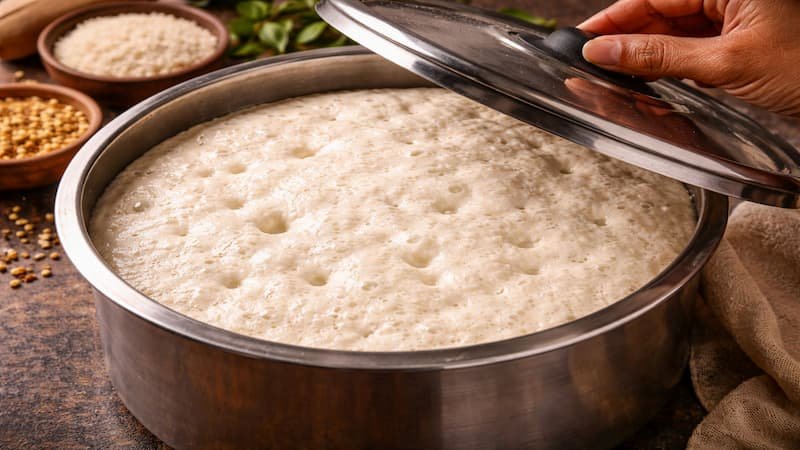
The key to great idli and dosa is fermentation. When rice and lentils are soaked, ground, and left at room temperature, naturally occurring bacteria (primarily Leuconostoc mesenteroides and Streptococcus thermophilus) ferment the batter, producing carbon dioxide and lactic acid. The carbon dioxide makes the batter rise and the idlis become light and fluffy.
The lactic acid gives the batter its characteristic pleasant sourness and also improves its nutritional profile by increasing B vitamins and improving the bioavailability of minerals. The key variables are temperature and time — warmer temperatures accelerate fermentation, while cooler temperatures slow it down.
Choosing the Right Rice and Lentils
The traditional recipe uses idli rice (a short-grain parboiled rice) and urad dal (white split lentils with husks removed). Idli rice is specifically chosen because it has the right starch structure to produce the soft, spongy texture of idli. Regular raw rice can be used but produces a slightly different (though still good) result.
The ratio of rice to urad dal is typically 3:1 or 4:1, though some bakers prefer a more lentil-heavy batter for idli (2:1) and a more rice-heavy batter for dosa (4:1). Adding a small amount of fenugreek seeds (about half a teaspoon) to the urad dal during soaking helps fermentation and gives the batter a distinctive flavor.
The Soaking Process
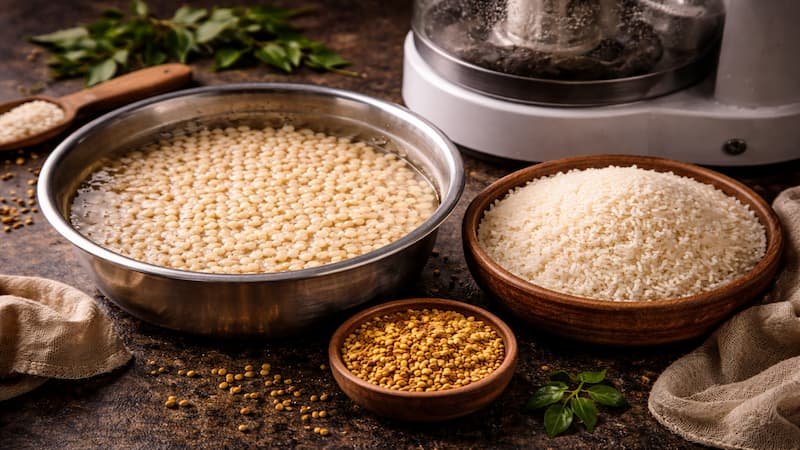
Wash the rice and urad dal separately in multiple changes of water until the water runs relatively clear. This removes excess starch from the rice and dirt from the lentils. Then soak them separately in plenty of water — the rice for at least 6 hours and the urad dal for 4-6 hours.
The urad dal will expand significantly during soaking. Soaking is important because it softens the grains, making them easier to grind, and it begins the process of breaking down phytic acid (an anti-nutrient that inhibits mineral absorption). Do not skip the soaking step or reduce the soaking time.
Grinding the Batter
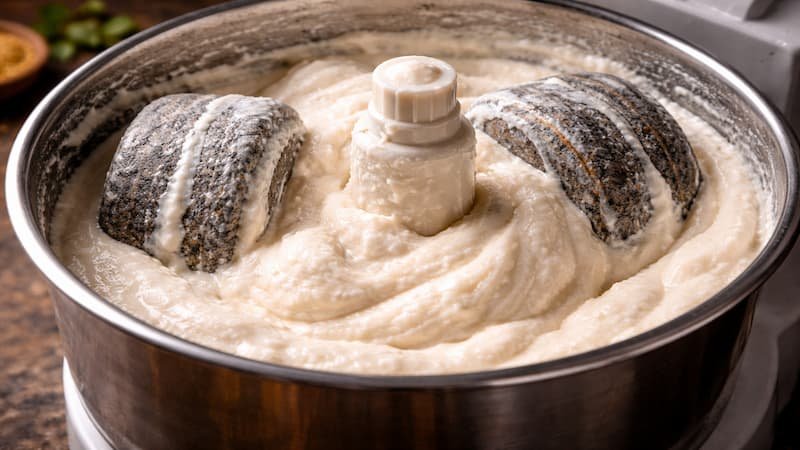
The grinding process is critical to the texture of the final product. Traditionally, a wet stone grinder (which grinds the batter while incorporating air) is used, and it produces a notably superior batter to a blender. However, a powerful blender works well for most home cooks. Grind the urad dal first, using as little ice-cold water as possible, until you get an extremely smooth, light, and fluffy batter — it should almost look like beaten cream and should be airy.
The cold water prevents the motor from heating the batter. Then grind the rice with just enough water to make a smooth batter with a very fine, slightly grainy texture. Mix the two batters together thoroughly.
Fermentation — The Patient Wait
Pour the combined batter into a large container, leaving plenty of room for it to rise (fermentation can double the volume of the batter). Add salt and mix well. Cover loosely (the batter needs some air but should not dry out) and leave in a warm place for 8-14 hours, or overnight. In warm Indian climates (above 30°C), 8 hours is usually sufficient.
In cooler climates or during winter, you may need up to 18-20 hours. The batter is ready when it has roughly doubled in volume and smells pleasantly sour. A well-fermented batter will have a bubbly, slightly tangy aroma and a light, airy texture.
Making Perfect Idlis
The test of a good batter is in the idli. Gently mix the fermented batter without deflating it too much. Grease idli molds with a very thin layer of oil and fill each mold about three-quarters full. Steam for exactly 10-12 minutes over high heat.
The idlis are done when they pull away from the mold cleanly and a toothpick inserted in the center comes out clean. Do not over-steam as it makes them dense and rubbery. Perfect idlis should be white, soft, slightly spongy, and mildly tangy. Let them rest for a minute in the mold before removing.
Making Perfect Dosas
For dosa, you want a thinner batter — add water to the fermented batter until it reaches a thin, pourable consistency like buttermilk. Heat a cast iron or heavy non-stick pan over medium-high heat until very hot. Pour a ladleful of batter in the center and immediately spread it in concentric circles with the back of the ladle, working outward, until you have a thin round crepe about 8-9 inches in diameter.
Drizzle oil around the edges. Cook until the top surface looks dry and the underside is golden and crispy. For masala dosa, add a spoonful of spiced potato filling to one half and fold over.
Conclusion
Making idli-dosa batter from scratch is a practice that connects you to one of the most ancient and nutritionally sophisticated food traditions in the world. The fermentation process creates a food that is far more nutritious, digestible, and flavorful than most modern processed foods.
With a little practice, you will find that homemade batter becomes a regular weekend ritual that provides the foundation for days of healthy, delicious meals.